
When discussing accessible toilet facilities, most people are familiar with Doc M compliant layouts designed for wheelchair users. However, not all users require a full wheelchair accessible space.
This is where ambulant toilet packs come in.
Ambulant toilet layouts are designed for individuals who can walk but require additional support and stability, helping them use toilet facilities safely and independently.
This guide explains what an ambulant toilet pack is, how it is used, and where it fits within accessible toilet design.
In the context of accessible design, the term ambulant refers to individuals who are able to walk but may have:
These users do not require wheelchair access but benefit from additional support when sitting down, standing up, and moving within a cubicle.
An ambulant toilet pack is a set of products designed to be installed within a standard-sized toilet cubicle, providing additional support for users with limited mobility.
A typical ambulant pack includes:
Unlike a Doc M pack, ambulant packs are not designed for wheelchair transfer, but instead focus on stability and ease of use.
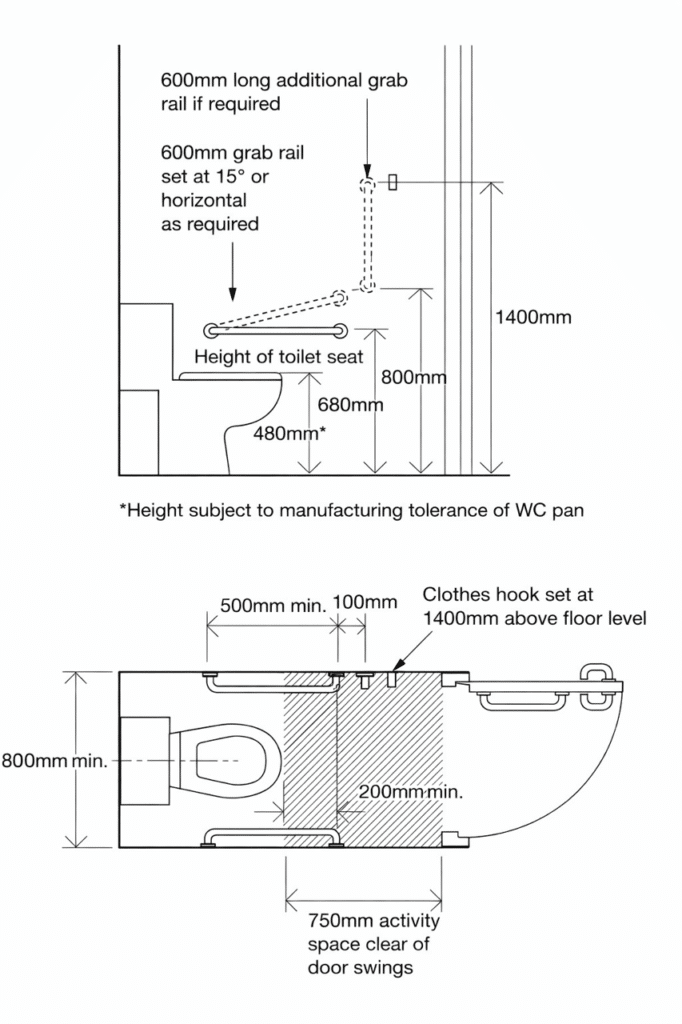 Typical ambulant toilet layout with support rails positioned for stability and ease of use
Ambulant cubicles are typically designed with:
Because the user is mobile, the layout does not require:
This allows ambulant cubicles to be installed within standard washroom layouts, making them a practical solution in many commercial environments.
Ambulant toilet packs are commonly used in:
They are often provided alongside a wheelchair accessible Doc M toilet, ensuring that facilities cater to a wider range of users.
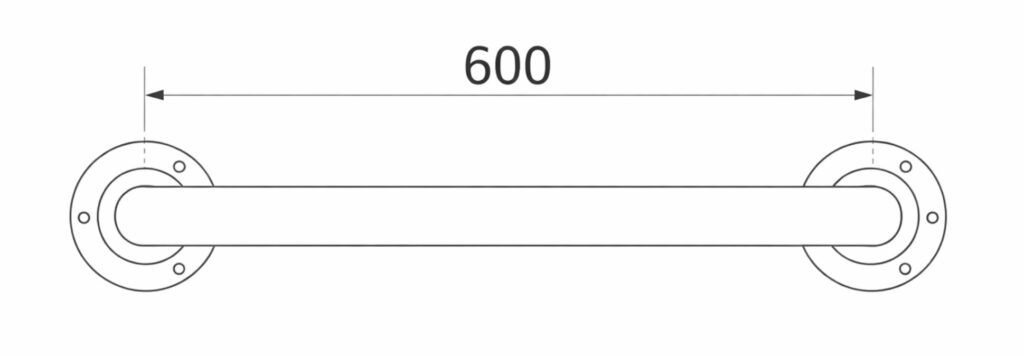
Typical grab rail used in ambulant toilet layout, providing support and stability on either side of the WC.
The most important feature of an ambulant pack is the positioning of grab rails.
These are typically installed:
Ambulant toilets are often installed at a slightly raised height compared to standard domestic WCs, making it easier for users to sit and stand.
Flush controls should be easy to operate, particularly for users with reduced dexterity.
Both lever and push-button systems can be used, depending on the specification.
Ambulant toilet layouts are referenced within the broader guidance of Approved Document M, which covers access to and use of buildings.
In many commercial settings, Building Regulations may require:
The exact requirements will depend on:
It is important to understand that an ambulant toilet is not the same as a standard toilet cubicle.
A standard cubicle typically:
An ambulant cubicle, by contrast:
When specifying an ambulant toilet pack, it is important to consider:
As with all accessible installations, the final layout should focus on usability, safety and practicality.
Ambulant toilet packs play an important role in accessible design by supporting users who require assistance but do not need full wheelchair access.
When used alongside Doc M compliant toilets, they help create environments that are more inclusive, practical and better suited to a wider range of users.
Understanding their purpose and correct application is key to achieving effective and compliant toilet design.
Malcolm has over 35 years’ experience in the bathroom and accessible sector. Through Mobility Essentials he provides practical guidance on accessible bathroom products used in domestic adaptations, healthcare environments and public buildings, and can offer informed advice on layout, specification and compliance considerations where required.
Article written by Malcolm Chappell – April 2026