In this chapter we are going to take an in-depth look at the main component parts that are integral to the make up of a seat. These being the hinge system and fixing bolts.
Although hinge systems and seat fixing (bolts) have different functions they are very much integrated with each other. They are generally constructed from two main materials, these being plastic and/or metal (metal includes zinc alloy, cast and stainless steel) Fixing bolts are also available in ABS material.
Hinge Systems
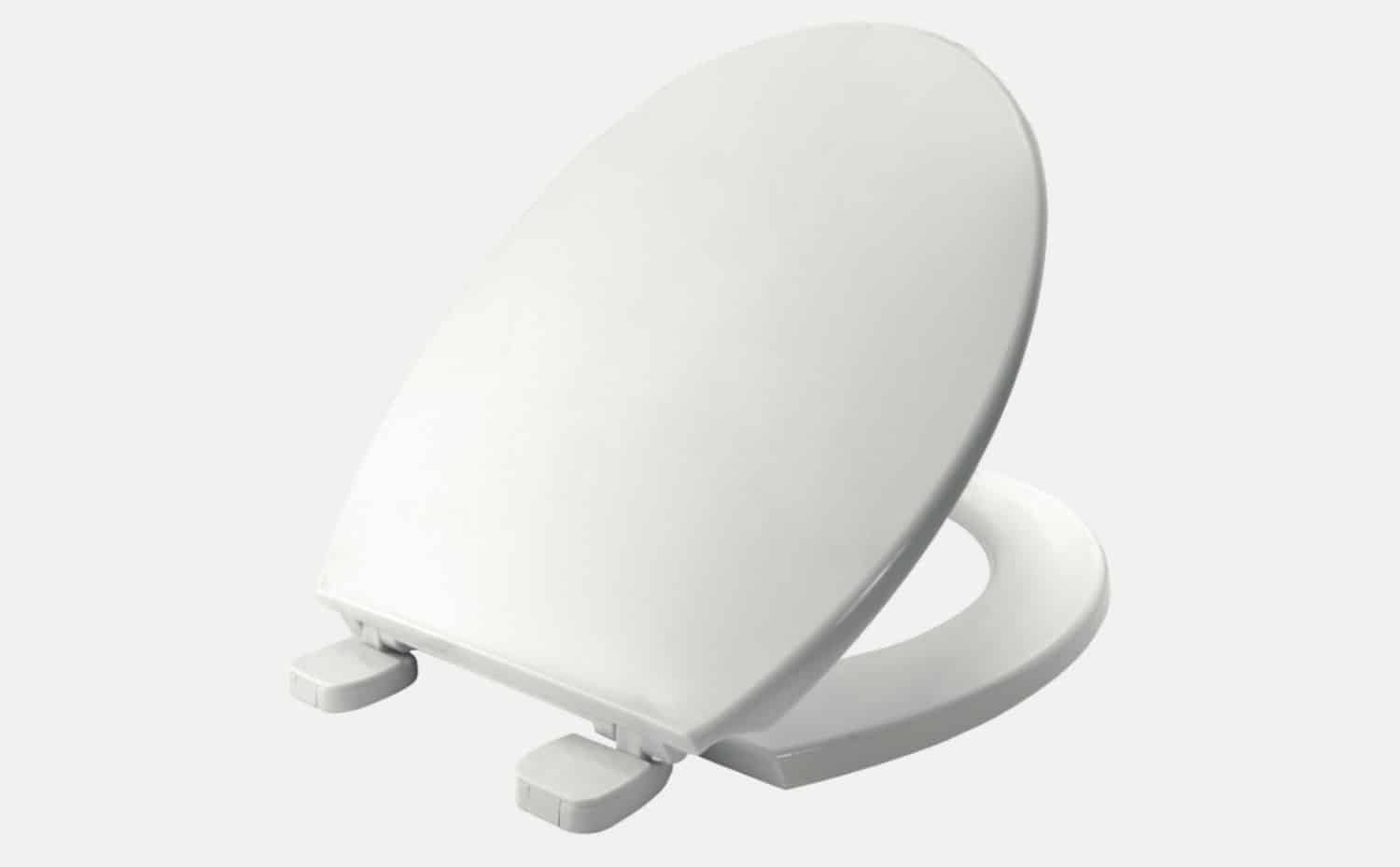
By application seat hinge systems are segmented into two types. These being ‘standard-close’ and ‘slow-close’. Standard-close hinges have been around since the very first hinged toilet seat (see Chapter 1) although designs and materials have change fundamentally since then. Conversely, slow-close hinges are a more ‘recent’ development with the first patent submitted in 2000, ‘wherein lowering movement of the seat or lid is controlled by a damping device with a spring-biased link guide and a liquid damper’ (extract taken from European Patent Office) In essence little has changed, and todays slow-close systems operate in very much the same way.
Standard Hinges
The standard hinge is a basic concept. It consists of a simple ’hinge’ arrangement to allow the toilet seat to be raised or lowered. (Fig 1) The actual mechanism design will vary from manufacturer to manufacturer but the principle is the same. The hinge illustrated in (Fig 1) shows a simple arrangement from a well-known European producer. The main hinge element is made from stainless-steel. Other types will be of plastic, zinc alloy, cast or chromed metal. Timber and resin seats generally have cast or zinc alloy hinges due to the heavier weight of the seat. Plastic seats will use chromed metal, stainless steel (as per Fig 1) or plastic. Being of basic design very little goes wrong and generally this type of hinge is very reliable.
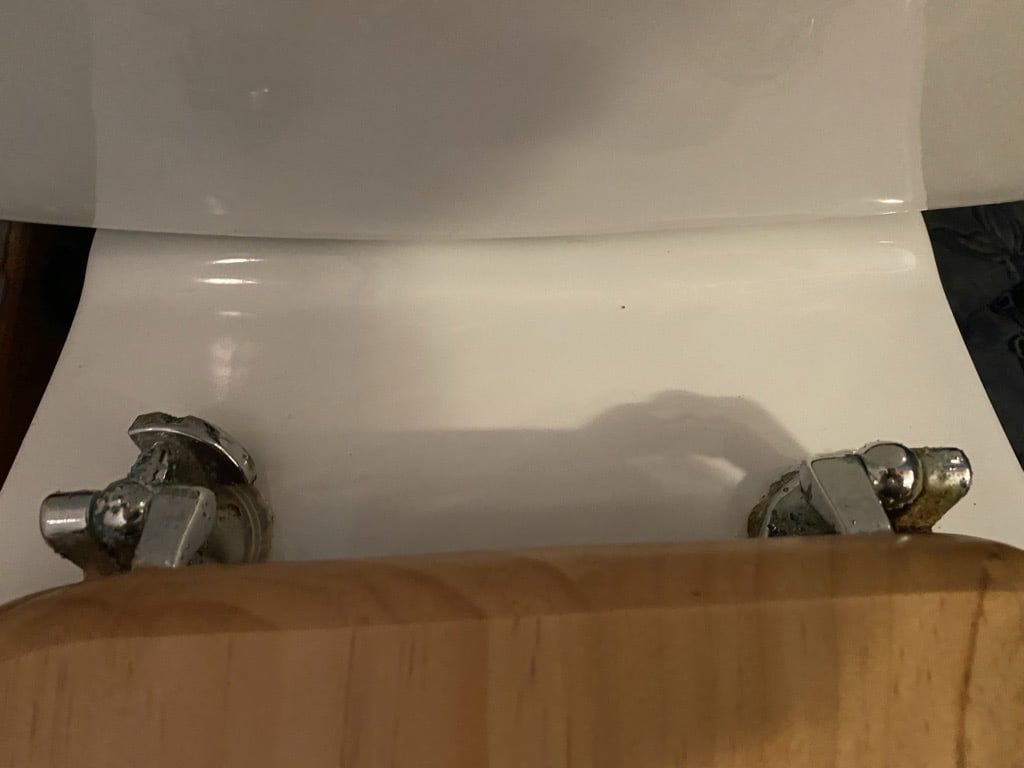
There is of course one caveat to this which relates to older style round cast/metal hinges used on low-cost timber and some resin seats. They have been known to fracture under heavy /continued use. Refer (Fig 2) which was taken at a recent hotel stop over. In fairness this type of hinge / seat is not really suited to hotel or commercial use so it’s no surprise it failed. When discussing hinge options with a potential supplier do ask about the availability of spare parts. A good supplier should have spare components ‘on the self’ in the event of replacements being needed. Replacing standard hinges is an easy and straight forward process.
(Fig 1)
(Fig 2)
(Fig 1)
(Fig 2)
(Fig 3)
Slow Close Systems
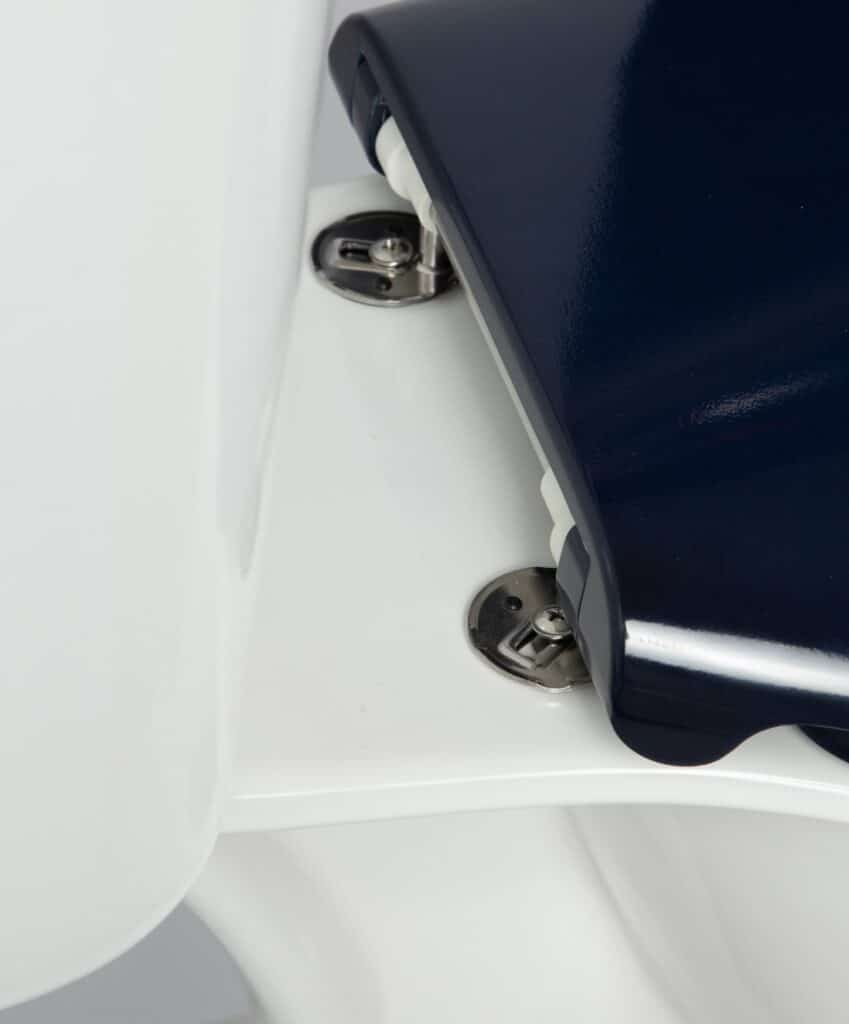
A slow-close system is one that closes on its own as soon as you start to push it down. One of the main benefits is that they require very little assistance when closing. With just a fingertip of pressure the seat closes in a smooth, even, and controlled manner slowly coming to rest on the WC pan. (Fig 3) This is particularly useful to members of the older generation as it alleviates unnecessary bending when closing the seat. The gentle closing of the toilet seat is almost silent and avoids the loud banging (seat to WC pan) noise associated with standard hinge seats if accidentally drop-closed. Something to be aware of if young children use the facilities. Hygiene is also improved due to reduced surface contact when closing.
How do slow-close hinges work?
Slow-close mechanisms work by using an oil located within a ‘housing chamber’ by the seat hinge. Generally, most housing chambers are made from plastic. Some are chrome plated to give the illusion of being metal. In a small number of cases metal is also used. It is the tension caused by the oil that allows the hinge to perform the ‘slow-close’ movement. This method works very well but as is often the case not all slow-close hinges are created equal. For example, some low-cost budget seats are known to use a ‘clear’ type of oil which is often housed in a thin membraned chamber. This membrane can pierce if the seat is force closed. If this happens repeatedly the hinge will leak, and the slow-close movement stops. Good quality mainstream manufacturers use a better-quality silicone-based oil that absorbs the resistance during seat closing. This together with having a sealed chamber ensures the unit is unlikely to fail.
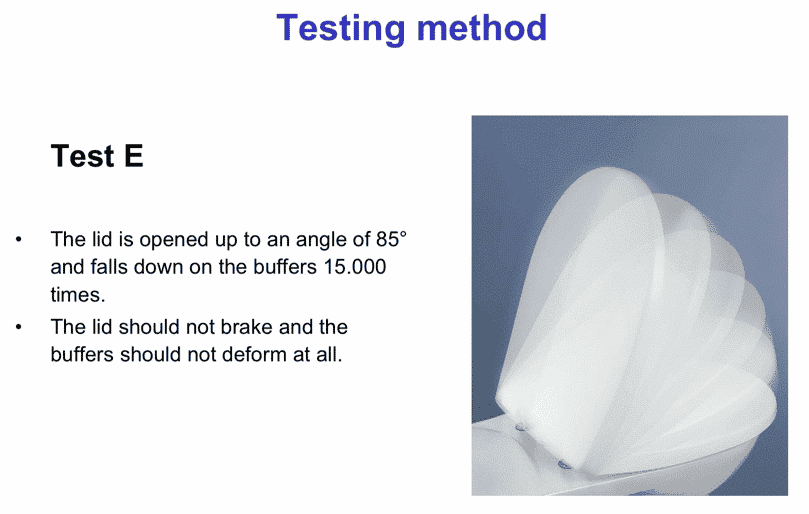
From a practical point of view, it’s all about expectations, budget and intended use. As we have mentioned previously, there is nothing wrong with purchasing a low-cost budget type seat. They have an intended marketplace and providing you know what you are buying, and the product suits your requirements then go for it. However, if your budget allows its always worth talking to a supplier who can offer a better-quality seat at a fair price. Ideally one that has documented evidence of testing to DIN 19516 test method E (Fig 4) These seats do cost more but ultimately you are buying a superior product and one that will stand the test of time.
(Fig 4)
(Fig 5)
Seat Fixings
As mentioned previously seat hinges and fixings are very much integrated with each other although they have different functions. Seat hinges allow the seat to open and close whilst seat fixings secure the seat to the WC pan by means of ‘fixing bolts’ (which are connected to hinge section) All WC pans sold in the UK will (or should) conform to British Standards. There are various British Standards governing WC pan specifications but for the sake of this report we are only really concerned with the following. BS EN 33:2019 – Pedestal W.C. pan with close coupled flushing cistern – Connecting dimensions (latest edition)
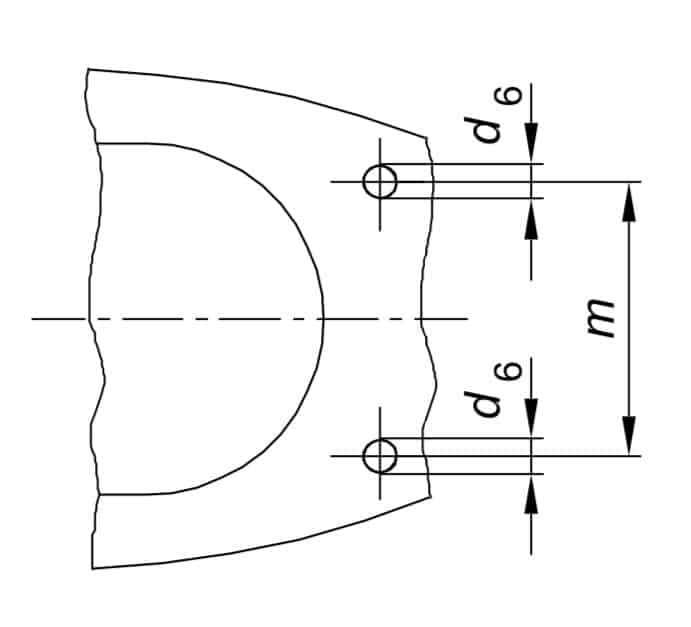
The two key dimensions we are interested in are shown in (Fig 5). They are:
(d6) Diameter of the fixing holes – 15mm (+/-2mm)
(m) The distance between the centre lines of the holes – 155mm (+/-10mm)
At 15mm (+/- 2mm) diameter there is more than sufficient space for all types of fixing bolts regardless of material & thickness to allow safe & secure fitment to the WC pan.
The distance between centre line of the holes should read in conjunction with another Standard, this being:
BS1254:1981– Specification for WC seats (plastics)
(Both Standards are available to purchase on-line at bsigroup.com)
Here the specification / dimension as shown in Table1. (Dimensions of WC seats -page 2) gives a distance of 145 to 175mm adjustment of centres of hinge bolts.
These dimensions only really come into play when purchasing a new or replacement seat. If you have purchased a new WC set & seat from a well-known branded manufacturer you should be on safe ground. The seat installation will be straight forward and connection to the WC pan trouble free. However, we must exercise a bit more caution when purchasing a replacement or new seat for an existing WC (regardless of brand)
Firstly, you must determine.
What size centres does you WC pan have?
What is the size of centres of your seat?
Most UK Spec WC pans will have 155mm centre measurement (although some older / imported brands may differ) Now look at the seat you intend to purchase. Does it have the same size centres? If not, are the seat fixings adjustable? Most should offer some degree of adjustment. Refer (Fig 6) This extract shows a typical plastic hinge seat which allows adjustment between 120 – 155mm. If the maximum adjustment on the proposed new seat is below 155mm or different to your WC, best stay clear and move on to another brand / type that is more compatible.
(Fig 6)
(Fig 10)
Adjustability
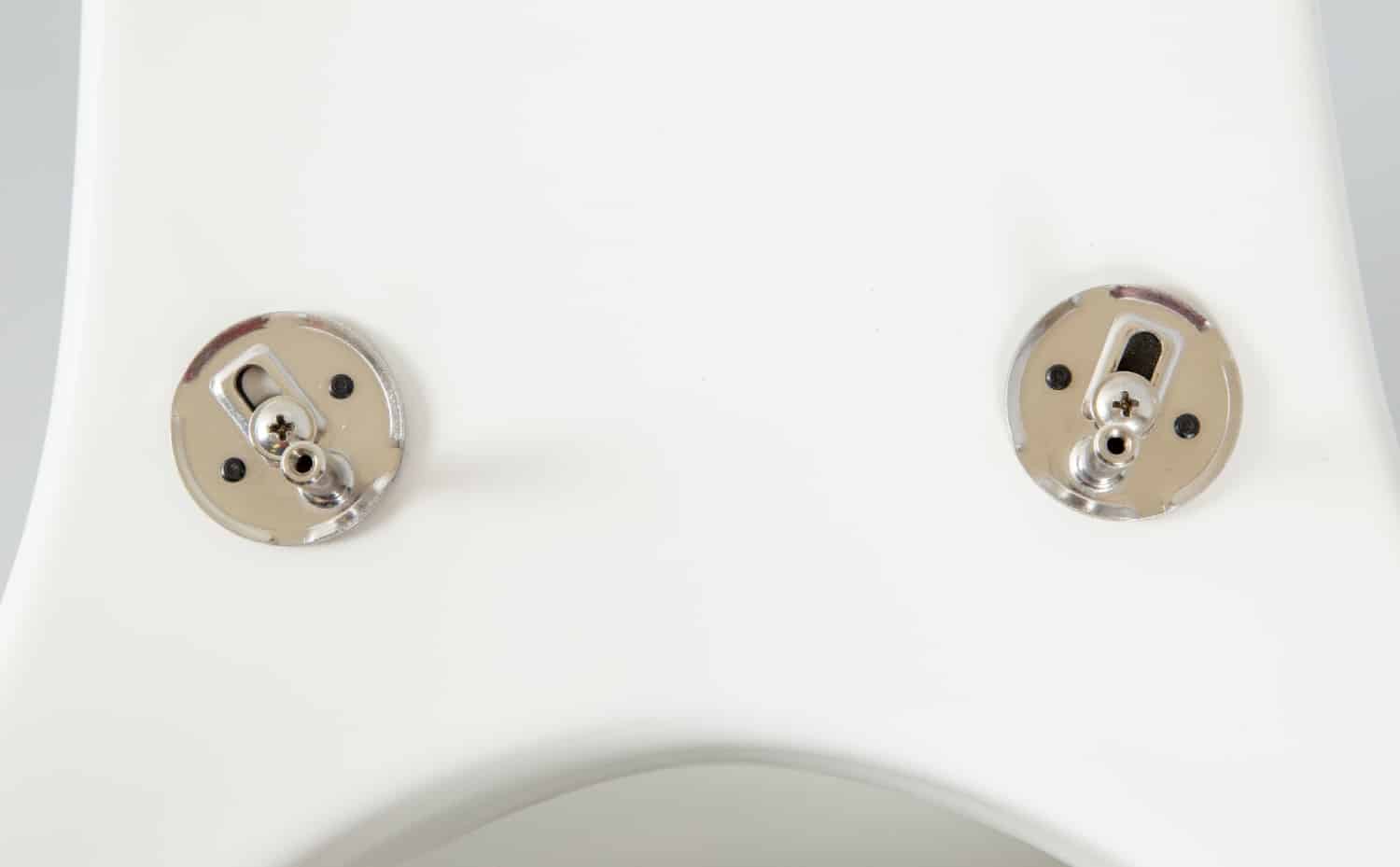
There are several types of adjustable fixings available today. A very elementary one is shown (Fig 7) which is common among plastic and some wood moulded seats. Another type in use today is shown in (Fig 8) This consists of a stainless-steel round plate & cover with upright pods that connect to the seat. (This will be covered in more detail in a latter chapter) By removing the cover (Fig 9) the installer can adjust fixing at any angle (Fig 10) to allow best possible fitment to the WC pan. This adjustment can be forward, backward or side to side. This is an extremely popular fixing and one that has been adopted by many manufacturers worldwide.
(Fig 7)
(Fig 8)
(Fig 9)
(Fig 10)
Fixing Bolts
The fixing bolt is the piece that secures the seat to WC pan by means of threading the bolts through the 15mm diameter WC pan fixing holes via the seat hinge bracket and using the nut to make secure. Depending on the type of seat you have these bolts could be plastic, ABS, metal, or stainless steel.
Plastic Bolts
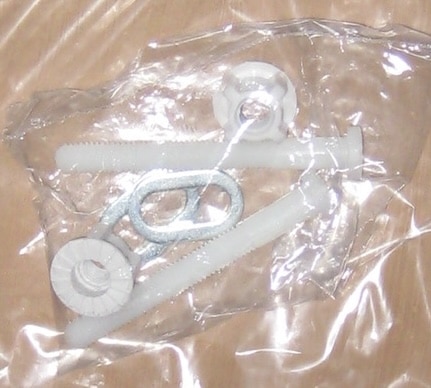
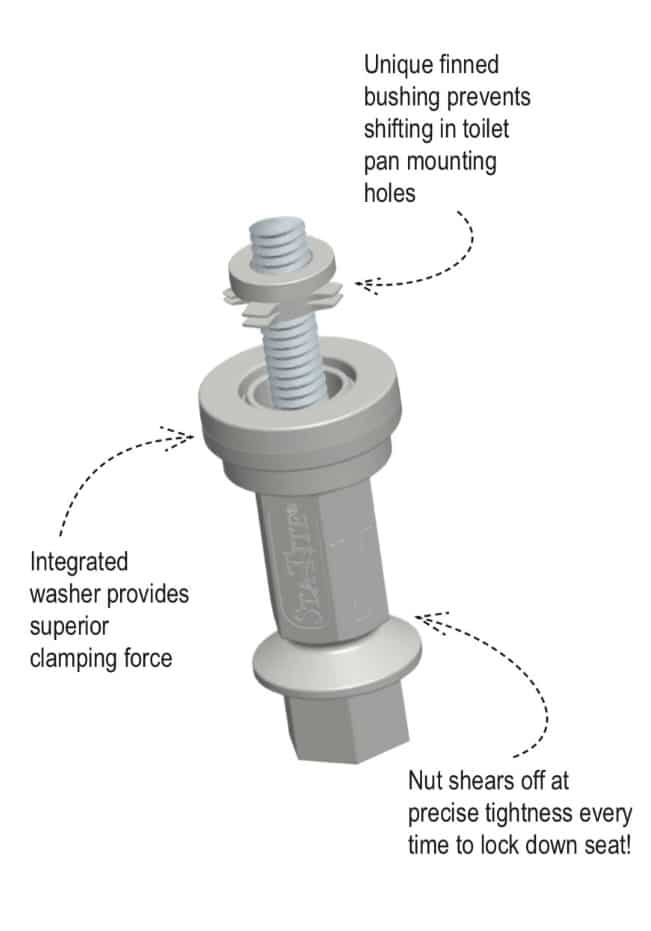
Plastic bolts have a lower cost but have the benefit of being totally rust free. (Fig 11) However, some of the lower cost types have been known to weaken and go brittle after long-term use (as some ABS types) But not all plastic bolts are suspect. There have been some clever developments recently among certain manufacturers to help improve the fitment and security of their plastic fixing bolts. One of which is shown in (Fig 12) Here the manufacturer provides an ingenious solution to the issues mentioned above. This bolt system has been designed to prevent loosening after installation. It is easy to install and claimed to last over 30,000 cycles (side to side testing) All clever stuff.
(Fig 11)
(Fig 12)
Metal Bolts
Manufactured from either metal or stainless steel. These types of fixing bolts are generally found on better quality seats, particularly those made from Duroplast material. They are also preferred option for Care seats, something we shall talk about in a later chapter. From experience most fixing bolts supplied are manufactured from 304 grade stainless steel (Fig 13) The major benefit here is they are rust resistant and will stand the test of time. Metal bolts are slightly more cost effective but will rust. In many ways it’s a false economy. So, best stay away and insist on stainless steel, preferably 304 grade or better.
(Fig 13)
Fixing Methods
By application there are two different methods of fixings. These being ‘bottom fix’ and ‘top fix’. The type you require will largely depend on the style and design of your WC pan. Below we explain the differences.
(Fig 14)
Bottom Fix
This simply means the connection is secured from ‘under’ the WC pan platform where the installer has full and unrestricted access. Typically, the installer will thread the bolt through the hinge fixing platform and then the WC pan fixing holes. The fixing is secured by means of a plastic or metal nut depending on suppliers’ specification (Fig 14)
Top Fix
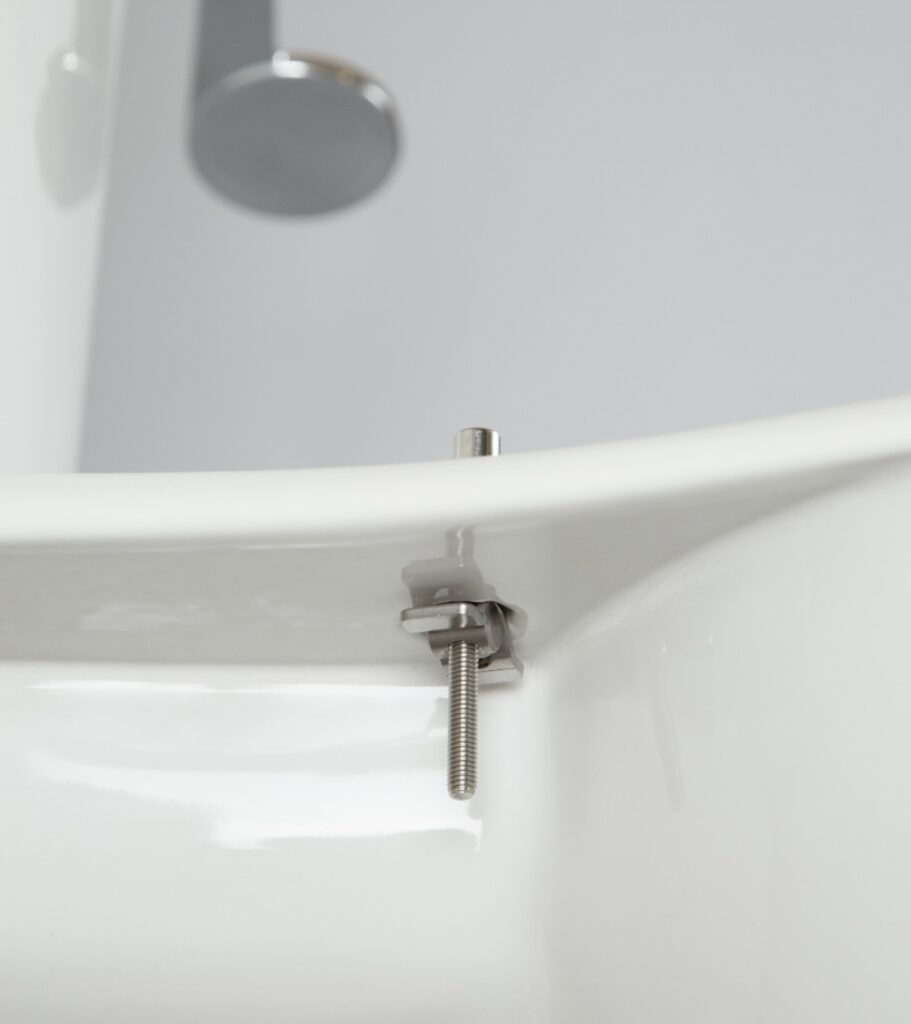
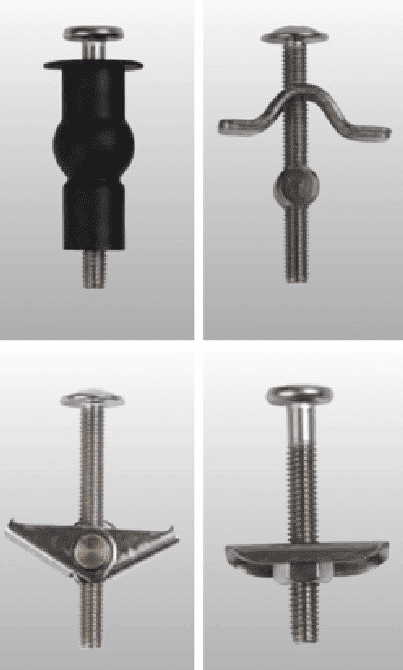
Commonly known as ‘retro’ fit these fixings were originally designed for WCs with restrictive access. Refer (Fig 15) This type of fixing is installed from the ‘top’ rather than underneath (bottom) The fixing is simply threaded through the hinge fixing plate. The installer would then add the small metal washer fixing and nut which then ‘slip’ through WC pan fixing holes. Under slight tension the installer will proceed to tighten the fixing until such time it is held firm. (Refer Fig 13) Different manufacturers will offer different variations as seen in (Fig 16) From experience those using metal washer fixings (either static or spring loaded) work exceptionally well. The black rubber insert type (which has a nut located withing the body) can prove problematic and work loose after time, particularly if the WC pan holes are on the maximum BS tolerance (+2mm) So, something to be aware of.
Top fixings are perceived as a ‘benefit’ because they are ‘dual’ purpose and suitable for both top & bottom fix installations, hence why they are so popular.
(Fig 15)
(Fig 16)
(Fig 15)
(Fig 16)
Remember, a correctly installed fixing will mean your seat is safe & secure.
Next Time
In the following chapters we will look at seat buffers, seat removal systems, LED lights, commercial & healthcare seats, Ring seats and if sufficient demand (and it looks like there will be) Smart seats.