Most people never think about toilet height until sitting down or standing up starts becoming difficult.
A standard toilet may be perfectly suitable for many users, but for others a slightly higher toilet can make a significant difference to comfort, confidence and independence.
In this guide, we explain the difference between standard height and comfort height toilets, who they are designed for and the factors you should consider before choosing one.
What Is A Standard Height Toilet?
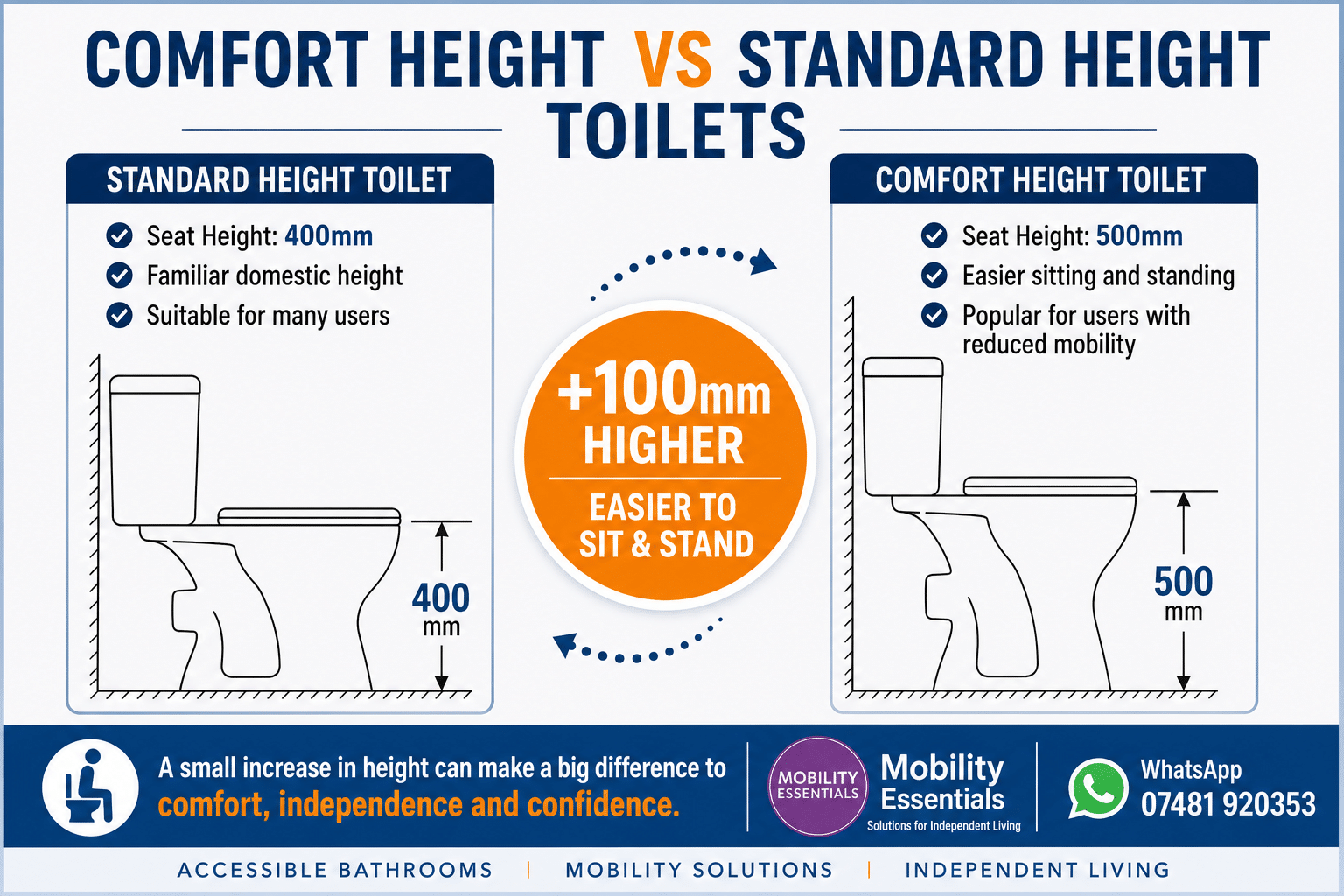
A standard domestic toilet typically has a seat height of around 400mm from floor level.
This has been the traditional height used in UK homes for many years and remains suitable for many people.
Benefits include:
* Familiar seating position
* Suitable for most domestic bathrooms
* Widely available in many styles
* Often slightly easier for children and shorter users
However, as we get older or experience mobility issues, lower toilet heights can require more effort when sitting down and standing up.
What Is A Comfort Height Toilet?
A comfort height toilet is designed with a higher seating position.
Most comfort height toilets have seat heights between 470mm and 500mm, making them noticeably taller than a standard toilet.
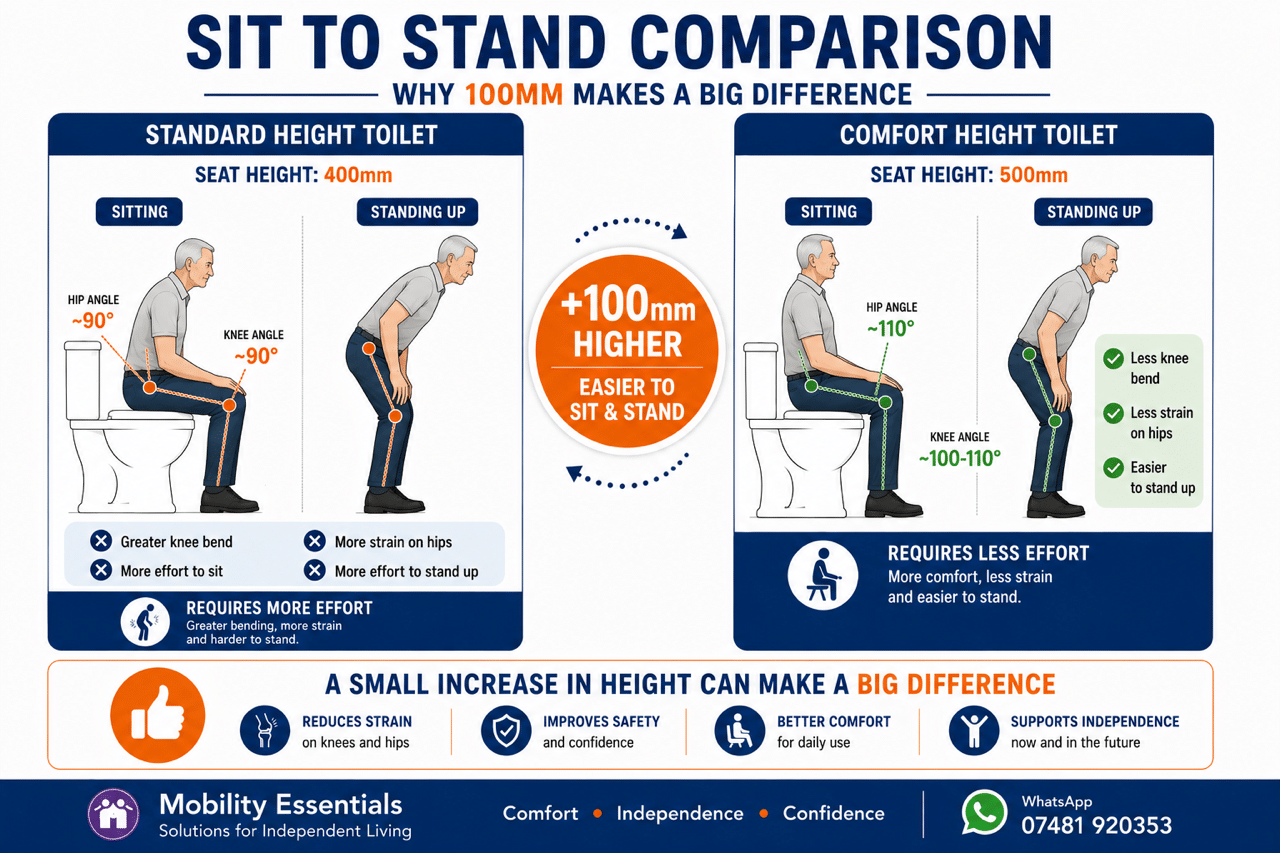
Although the difference may only be around 70–100mm, it can significantly reduce the amount of bending required when using the toilet.
Benefits include:
* Easier sitting and standing
* Reduced strain on knees and hips
* Popular with older users or users
* Helpful for users with reduced mobility
* Often preferred after certain medical procedures or joint replacements
Why Does 100mm Make Such A Difference?
It may not sound like much, but a 100mm increase in seat height changes the angle of the knees and hips when sitting.
This means:
* Less effort is required to lower yourself onto the seat
* Less strength is needed to stand back up
* Transfers can feel more controlled and safer
* Users often feel more confident and independent
For many people, particularly those with arthritis or reduced leg strength, this small height increase can have a surprisingly positive impact on daily life.
Who Should Consider A Comfort Height Toilet?
Comfort height toilets are often chosen by:
* Older adults
* People with arthritis
* Users with knee or hip problems
* Individuals recovering from surgery
* People with reduced mobility
* Care providers looking to improve ease of use
That said, they are not exclusively for disabled users. Many homeowners simply find them more comfortable.
Are Comfort Height Toilets The Same As Doc M Toilets?
No.
This is a common misunderstanding.
A comfort height toilet simply refers to the seating height.
A Doc M toilet is designed to comply with accessibility guidance and usually incorporates additional requirements such as:
* Specific projection dimensions
* Transfer space considerations
* Appropriate flush controls
* Compatibility with grab rails and support systems
A toilet can be comfort height without being a Doc M toilet.
Things To Consider Before Choosing
Before selecting a toilet, consider:
Your Height
Taller users often prefer a higher seating position.
Mobility Requirements
If sitting and standing is becoming difficult, a comfort height model may help.
Bathroom Layout
Toilet projection and transfer space may be just as important as height.
Future Needs
Many homeowners choose comfort height toilets as a long-term solution that helps them remain independent as mobility changes.
Conclusion
A comfort height toilet may only be around 100mm higher than a standard toilet, but that small increase can make a significant difference to comfort, independence and ease of use.
The best choice depends on the individual user, their mobility requirements and how the bathroom will be used.
Understanding the difference between standard and comfort height toilets is a simple first step towards creating a safer and more comfortable bathroom environment.
Need help choosing the right toilet height?
Mobility Essentials offers a free bathroom accessibility review to help homeowners, families, occupational therapists and care providers identify practical solutions for safer and more accessible bathrooms.
📱 WhatsApp: 07481 920353
Or explore our range of comfort height, healthcare and accessible toilets at Mobility Essentials.
About the Author
Malcolm has over 35 years’ experience working within the UK bathroom, healthcare and accessibility sectors, with extensive knowledge of Approved Document M, accessible bathroom layouts and mobility-focused sanitary solutions.
His work has included advising on accessible toilet, shower room and healthcare environments across both domestic and commercial settings, with a strong focus on practical usability, safety and long-term accessibility.